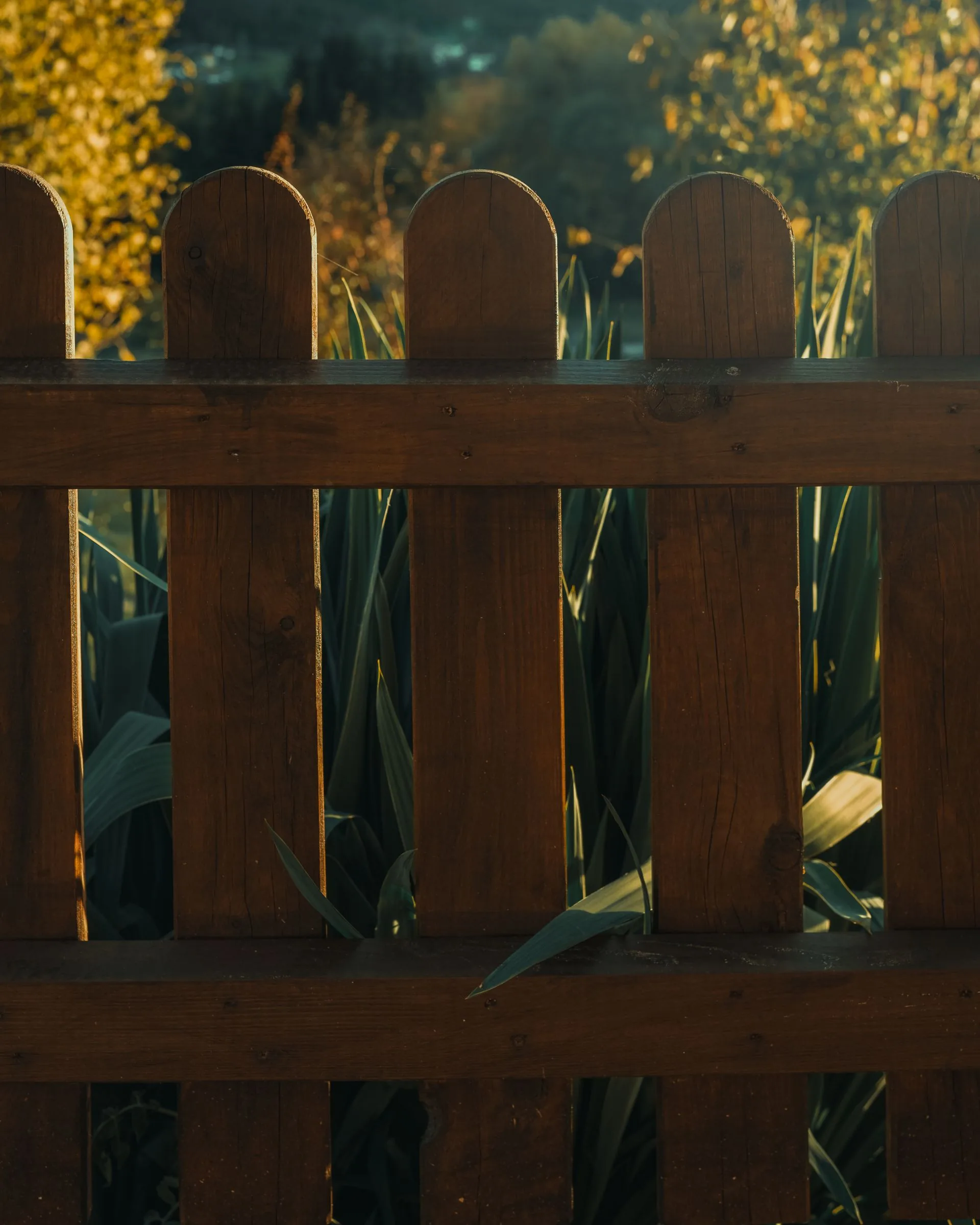
The short answer
The best privacy fence is usually a solid system at a suitable height with carefully planned gates and minimal gaps. Wood, vinyl, composite, masonry, and screened metal can all work, but wind, maintenance, appearance, rules, and budget should decide the final choice.
Privacy is more than fence height
Sight lines change with grade, nearby decks, windows, and street elevation. A tall fence at the bottom of a slope may provide less screening than expected. Walk the proposed line and look from the areas where privacy matters most before deciding the height.
Gates, board spacing, and gaps under stepped panels can also weaken privacy. The layout should address those details without creating drainage or access problems.
Compare the common options
Wood is adaptable and familiar, with many board patterns and finish choices. Vinyl can provide solid screening with less routine finishing. Composite systems can offer a consistent appearance, though cost and product availability vary. Masonry provides substantial screening but is a different type of project with foundation and permitting considerations.
Chain link with slats or screening can reduce visibility, but it does not look or perform exactly like a solid panel. Added screening increases wind load, so the framework and posts need to be suitable.
Check rules and maintenance before choosing
Fence-height rules, corner visibility, front-yard limits, and neighborhood requirements may control what can be built. Confirm those before ordering material. Also decide whether you are comfortable staining wood or prefer a system that mainly needs cleaning and hardware checks.
- Measure the sight line, not only the fence line
- Plan gates so they close without large gaps
- Account for wind on solid panels
- Keep the fence accessible for future maintenance